Cannot Delete Print Job in Windows. Have you ever run into the situation where you sent a job to the printer, but it just refused to print? You check the print job queue and everything looks fine, but nothing is happening?
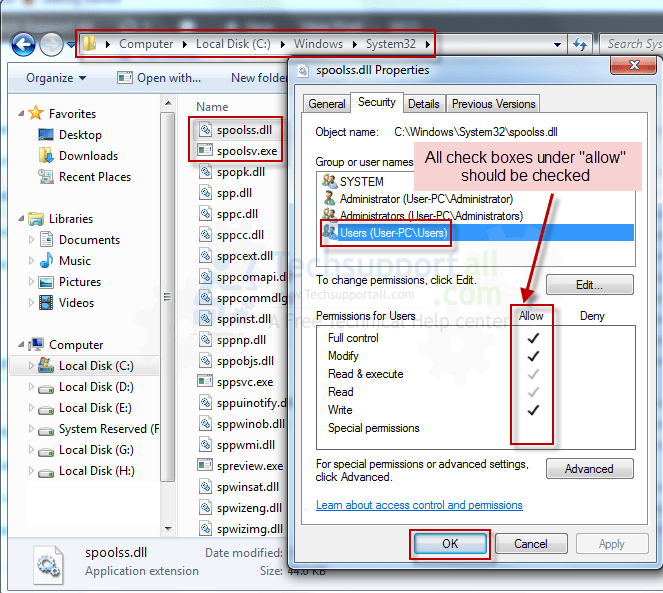


So either nothing happens or the print job ends up failing and USUALLY just goes away. If not, you then have to go into the print job queue and manually delete the print job, otherwise it will hold up all the new jobs coming to the printer. However, there are those few print jobs that really mess with you and simply refuse to delete! You Cancel, Delete, Remove the print job, yet it still remains in the queue. If you cannot delete a print job in Windows, you have to completely stop the print spooler service, delete the print job, and then restart the service. Note that when you stop the print spooler service and delete the print jobs, you will have to delete ALL of the current print jobs as there is no way to tell one print job from another. Step 1: First go to Start, then Run and type in services.
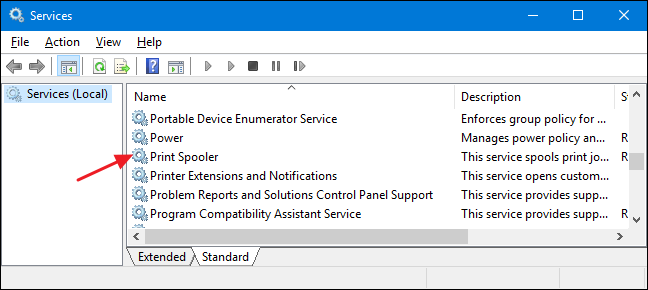
Scroll down to the Print Spooler service, right- click on it and choose Stop. Step 2: Now that the print spooler service is stopped, we have to go into the Windows folder where all of the print jobs are spooled and delete them.
Navigate to the following directory: C: \WINDOWS\system. PRINTERSAnd delete everything inside this folder. DO not delete the folder itself, just everything inside of it. This will remove all print jobs currently in the print queue. Step 3: Now go back to the Services window and right click on the Print Spooler service and choose Start. Go back to the Print Job queue and refresh it.

You should now see that all print jobs have been removed and you can start printing again normally. If you have a very important print job that is already in the queue behind the print job that failed, then deleting all of the jobs may not be an option for you. In that case, you can actually transfer the print queue to another printer and let it print out all the rest of the jobs in the queue. I will write another post on how to do that soon.
I installed the driver for it in my new laptop running Vista. Turns out the driver is not for Vista but XP. I uninstalled the XP driver and downloaded a Vista driver from Lexmark. When I try to run the printer software I get a message . Please restart the spooler or restart the machine. I have looked this problem up on the web and it is quite common with Vista. Many of the . I am not comfortable tinkering with the registry and thought I'd consult with you first.
Print Spooler Fixer is a Windows OS software useful to fix “Print spooler service is not running” error in Windows. Solve errors related to Print spooler service.
The system will show some booting options select safe mode. Note: Starting computer in safe mode may take some time. Uninstall the printer using Programs and Features from the control panel of your notebook. Uninstalling any software from Control Panel : 1. Click on Vista (start) button.
Click on control panel. Double click on Programs and Features.

Click on YOUR Lexmark Printer and click on remove. Download and reinstall the printer software using the below given link : http: //downloads.

Lang=en& os. Now plese check with printing any document. If the still persists then perform the below given steps : Click on Vista (Start) button, and type Regedit. Navigate to the following branch. HKEY. For information on keeping your HP and Compaq products up and running, please visit our Web site at: http: //www.
How to stop the print spooler; How to start the print spooler; How to get the print queue to respond; Microsoft Windows Vista. The print spooler controls print options within the Windows environment. A problem with the print spooler can affect printer driver performance and print.
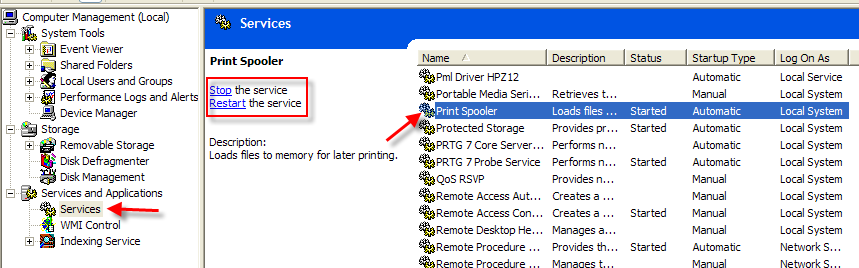
The fastest way to fix a stopped printer is to delete the offending print job from the queue. In cases where the printer still won't work after doing this, try. The below procedure will explain how to fix the Printr Spooler service crash(Print spooler service is not running), Due to un-signed drivers or corrupted print.


/http%3A%2F%2Fi-7.vcimg.com%2F164e4bf6f137e0023ce91a2e99269aaf345003%28600x%29%2Fthumb.jpg)
/http%3A%2F%2F3.bp.blogspot.com%2F-_go01xz38Pk%2FVjzfygUimCI%2FAAAAAAAAQPs%2F-q2MKULjFxU%2Fs1600%2Fhuesos%2B5.jpg)
/https%3A%2F%2Fsupport.kaspersky.com%2Fimages%2F493_00913-122263.png)
/https%3A%2F%2Fwww.stgeorgeutah.com%2Fwp-content%2Fuploads%2F2014%2F08%2FCavallaro_Joseph_PressRelease_Image.jpg)